The Maldivian government has reintroduced a requirement for employers to deposit the salaries of expatriate workers directly into bank accounts held by the employees, as part of renewed efforts to strengthen oversight
The Maldivian government has reintroduced a requirement for employers to deposit the salaries of expatriate workers directly into bank accounts held by the employees, as part of renewed efforts to strengthen oversight of the expatriate workforce and formalise salary payments.
The Ministry of Homeland Security, Labour and Technology amended the Regulation on the Employment of Expatriates in the Maldives today, adding a new clause to Article 58 requiring expatriate salaries to be deposited into a bank account held by the respective employee at a financial institution registered with or licensed by the Maldives Monetary Authority (MMA).
The new requirement will come into effect 30 days after the amendment.
The government had previously sought to enforce mandatory salary deposits for expatriate workers. Under provisions introduced through a 2016 amendment to the Employment Act, employers that failed to deposit expatriate salaries into bank accounts could face fines ranging from MVR 10,000 to MVR 50,000.
However, enforcement of those penalties was suspended on December 28, 2017, leaving the requirement without effective enforcement for several years.
The reinstatement comes as the government steps up efforts to regularise expatriate workers and improve the monitoring of the expatriate population in the Maldives.
On May 9, Homeland Security, Labour and Technology Minister Ali Ihusaan said the government had collected information on 98 percent of expatriates in the country as part of its ongoing expatriate regularisation efforts.
The mandatory banking of salaries also has implications for monitoring remittances by foreign workers. The requirement was originally introduced partly to facilitate the collection of the three percent Remittance Tax imposed on money sent abroad by expatriate workers.
By requiring salaries to pass through regulated financial institutions, authorities can obtain a clearer record of payments made to expatriate workers and their subsequent remittances, while reducing the scope for undocumented or informal salary payments.
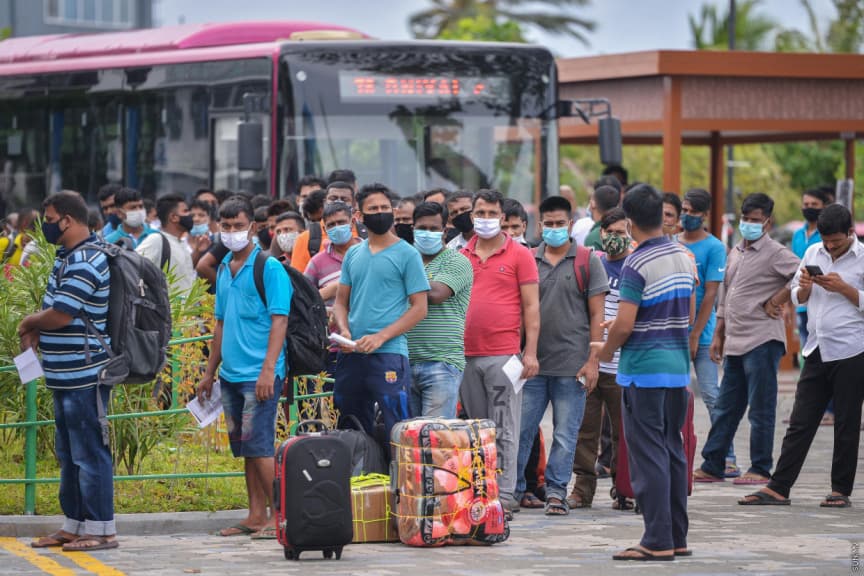
The measure comes against the backdrop of the Maldives’ long-standing challenge of managing a large expatriate workforce, including workers who are living or working in the country without proper documentation. The government has been conducting a nationwide effort to identify undocumented expatriates, regularise those eligible to remain and address irregular employment practices.
Under the newly amended regulation, employers will therefore have 30 days to ensure that expatriate salary payments comply with the new banking requirement.
How did this land?
Share this story
Discussion
Comments are turned off for now.