Eagle Hills Chairman Mohamed Alabbar has outlined an ambitious vision for the Maldives Waterfront and Marina project in Rasmalé, saying the development is intended to expand the Maldives beyond its traditional identity
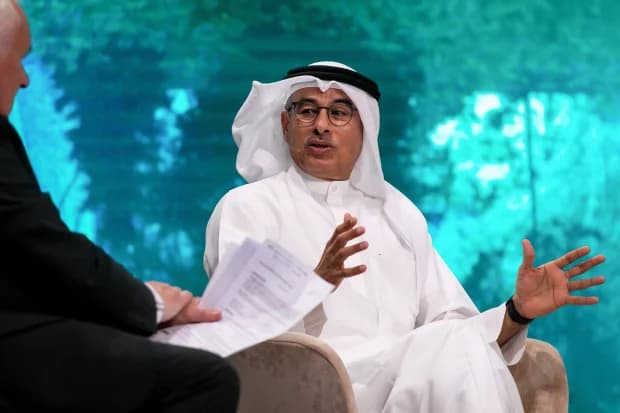
Eagle Hills Chairman Mohamed Alabbar has outlined an ambitious vision for the Maldives Waterfront and Marina project in Rasmalé, saying the development is intended to expand the Maldives beyond its traditional identity as a holiday destination and create a place where people can live, work and spend extended periods.
Speaking in a video shared on social media following the signing of a major agreement between Eagle Hills and the Maldivian government, Alabbar said the global reputation of the Maldives provides a unique foundation for developing a high-end residential and tourism destination.
Alabbar questioned why a country regarded internationally as one of the world’s premier holiday destinations could not also become an attractive place to live.
His vision forms a central part of Eagle Hills’ planned development within Rasmalé, the large-scale project being developed on reclaimed land in the Fushidhiggaru Lagoon.
The Maldives Waterfront and Marina is planned as an integrated development rather than a conventional resort, with residential properties, hotels, a marina, commercial areas and facilities intended to support both visitors and residents.
The development is located approximately a 17-minute speedboat journey from Malé and forms part of the wider Rasmalé project, which involves the reclamation and development of around 500 hectares of land.
According to the vision outlined by Alabbar and Maldivian officials, the development is expected to incorporate different types of residential and commercial properties, alongside international schools, healthcare facilities, children’s parks and entertainment attractions.
The concept is designed to allow people to stay for significantly longer periods, with Alabbar saying the project should create a lifestyle where people can spend weeks or even months in the Maldives rather than visiting solely for a short holiday.
Eagle Hills is a company founded by Alabbar, who also founded Emaar Properties, the developer behind major Dubai landmarks including Burj Khalifa and The Dubai Mall. Eagle Hills has undertaken large-scale developments in several countries, including the Durrës Yachts & Marina project in Albania and Maryam Island in Sharjah.
However, Alabbar has described the Maldives project as distinctive because of the country’s strong international brand and its association with luxury tourism.
The Maldivian government has estimated the wider Rasmalé development at around USD 20 billion, equivalent to approximately MVR 308 billion, while Eagle Hills has put the investment required for its portion of the development at approximately USD 12 billion, to be implemented in phases.
The government has said the wider project could generate substantial foreign investment, employment and tourism opportunities. Reports have also cited projections of more than one million annual visitors once the development is fully completed, alongside billions of dollars in annual tourism revenue and more than 54,000 jobs.
The agreement with Eagle Hills represents one of the government’s major steps toward developing Rasmalé as a new urban and economic centre outside the existing Malé-Hulhumalé area.
Alabbar has also stressed that the scale of the project comes with significant responsibility, particularly in protecting the Maldives’ marine environment.
He said the development would be carried out with respect for Maldivian people and the environment, including measures intended to avoid harm to coral reefs, marine life, fish and sea turtles.
Describing the opportunity as an honour, Alabbar said Eagle Hills had been entrusted with a project of historic significance for the Maldives.
He further emphasized that the reputation of the Maldives would remain central to the company’s work, while expressing hope that the development would ultimately meet the expectations of the Maldivian people.
How did this land?
Share this story
Discussion
Comments are turned off for now.