President Dr Mohamed Muizzu has urged investors, financial institutions and international businesses to increase investment in Small Island Developing States SIDS, arguing that island nations offer opportunities across sectors ranging from digital
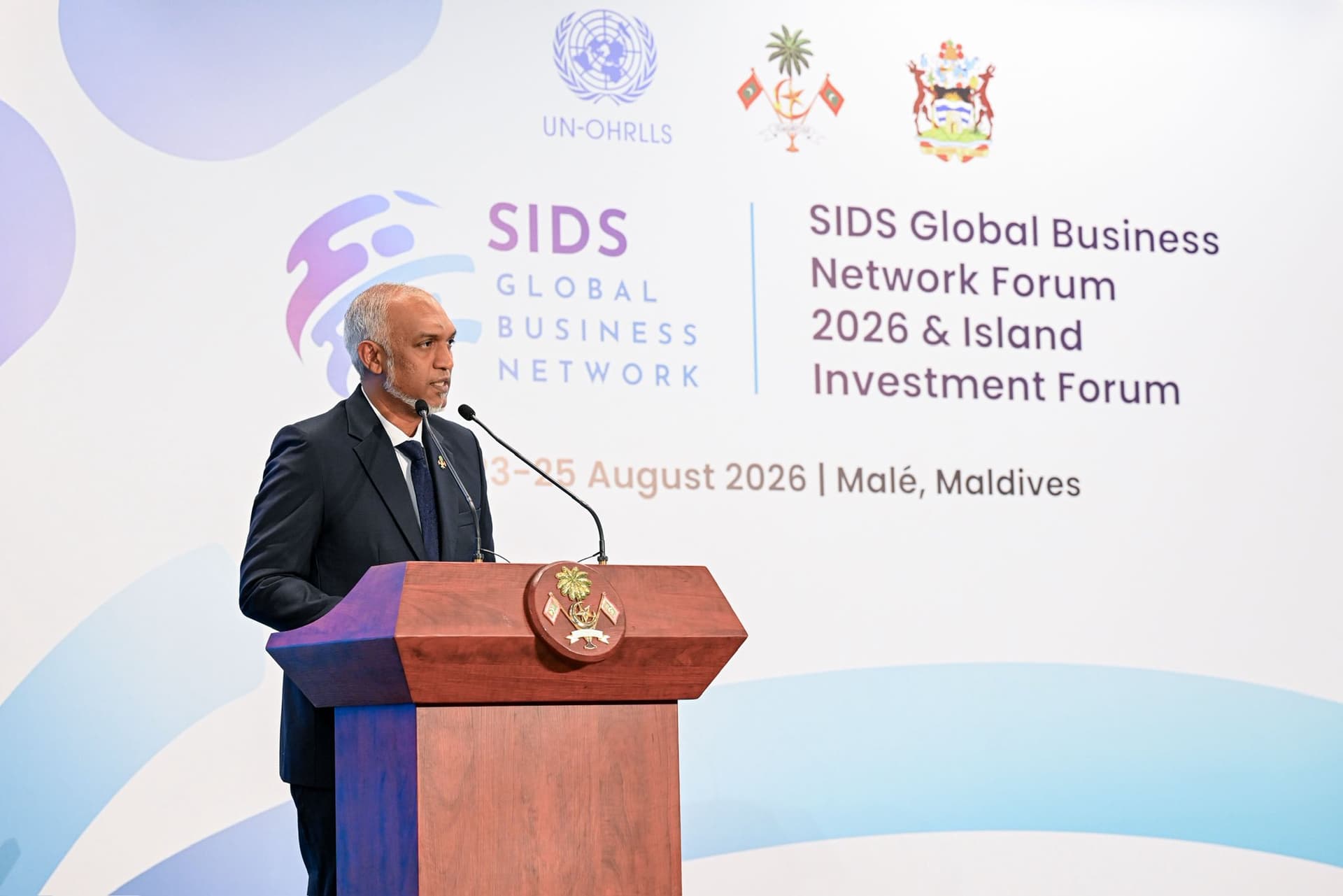
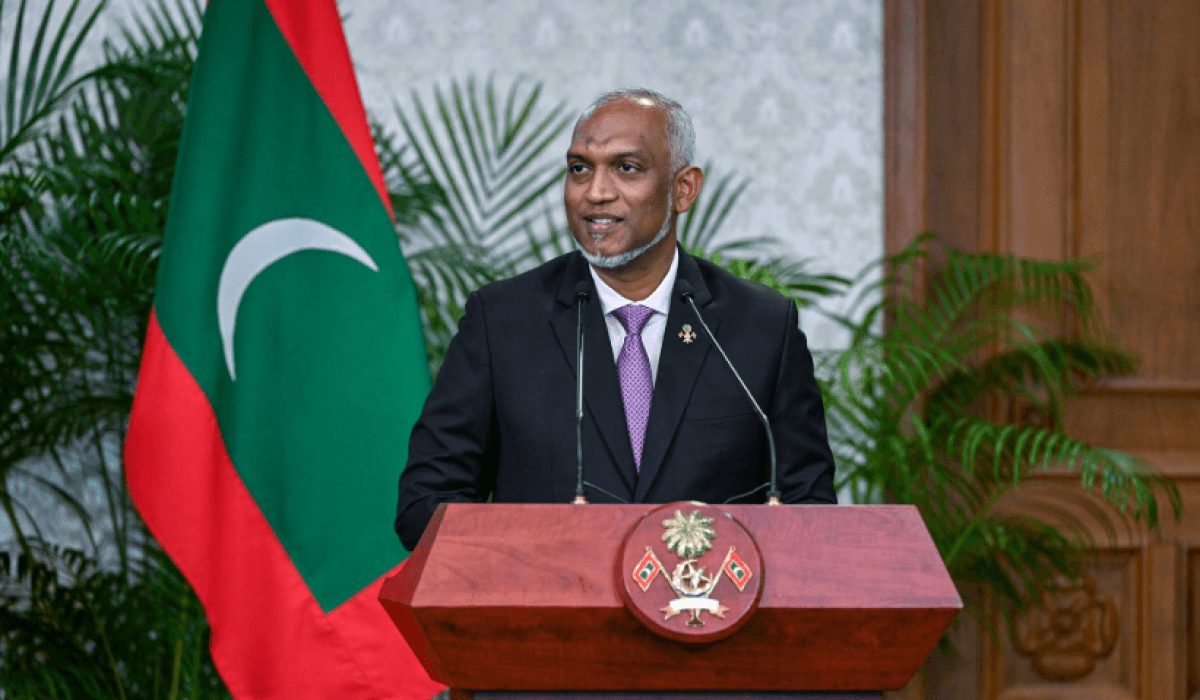
President Dr Mohamed Muizzu has urged investors, financial institutions and international businesses to increase investment in Small Island Developing States (SIDS), arguing that island nations offer opportunities across sectors ranging from digital services and renewable energy to tourism, logistics and the blue economy.
Speaking at the opening of the SIDS Global Business Network (GBN) Forum 2026 and Island Investment Forum in the Maldives, Muizzu said investment discussions surrounding SIDS have for too long focused predominantly on their vulnerabilities and constraints.
“These realities are important, but they are not the whole story,” he said, stressing that SIDS should also be viewed as markets for innovation, sustainable energy, digital services, tourism, logistics, climate solutions and new forms of enterprise.
The President said the inaugural Island Investment Forum provides an opportunity to connect investors and businesses with emerging opportunities across island economies.
He highlighted the Maldives’ experience in attracting international investment across industries and infrastructure, saying such investments have generated benefits for both the country and investors.
“We continue to welcome investors and partners who are prepared to grow with us — bringing capital, technology, expertise and access to markets, while creating lasting value for our people and our economy,” Muizzu said.
He identified adaptation and resilience as particularly important areas for investment, arguing that spending in these areas can also generate significant economic returns.
Muizzu also called for a stronger focus on investment and cooperation between SIDS themselves, saying solutions developed in one island setting can often be adapted to other countries facing similar challenges.
He said the SIDS GBN Forum could help transform ideas and early-stage businesses into investment opportunities, technology partnerships, commercial relationships and access to international markets.
The President called for stronger mechanisms to enable successful solutions developed in one SIDS to be shared with others, allowing island countries to benefit from each other’s experience without having to repeat the same trial-and-error process.
He pointed to the Maldives’ own experience in climate adaptation, resilience and nature conservation as examples of knowledge that could benefit other SIDS.
Muizzu also emphasised the importance of unlocking the economic potential of the blue economy.
He identified sustainable fisheries, marine tourism, maritime services, technology and innovative conservation financing as areas where SIDS could develop new economic opportunities.
At the national level, Muizzu said the Maldives is pursuing a broader economic transformation focused on diversification, digitalisation, connectivity and private-sector investment.
He highlighted the government’s goal of increasing the contribution of the digital and creative economies to 15 per cent of GDP by 2030, as well as plans to establish the country’s first Trade Acceleration Zone by January 2027.
The President also pointed to the Maldives’ efforts to expand market access through international trade arrangements, including the Maldives-China Free Trade Agreement and the Preferential Trade Agreement with Türkiye, which recently entered into force, while discussions continue on closer trade arrangements with India.
Physical infrastructure was also highlighted as an essential component of economic development in an archipelagic country.
Muizzu said investments in transport networks, sea and air connectivity and strategic infrastructure are intended to improve the movement of people and goods and expand access to markets.
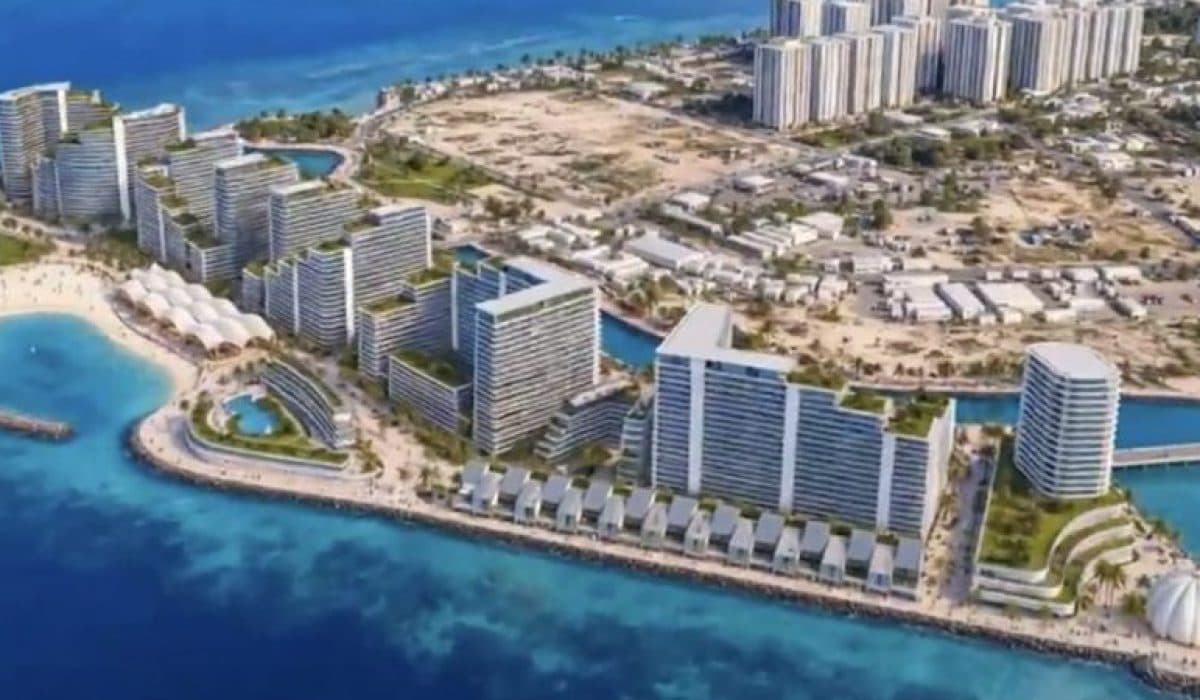
He specifically highlighted the development of the Thilafushi International Port, which he said would strengthen the Maldives’ logistics and maritime capabilities while creating additional opportunities for trade and investment.
Renewable energy was identified as another major area for investment, with the government advancing large-scale projects, including floating solar, as part of efforts to improve energy security and reduce dependence on imported fuel.
The President said digital connectivity is similarly becoming essential economic infrastructure for SIDS.
Under the Maldives 2.0 agenda, the government is seeking to use digitalisation to overcome geographical limitations, expand access to government and financial services and connect Maldivian businesses and talent with international markets.
Muizzu pointed to Google’s investment in subsea connectivity infrastructure in the Maldives as an example of how global technology partnerships can help address the geographical challenges faced by island economies.
He said such connectivity can support trade, financial services, tourism, creative industries, education and new employment opportunities.
The President also urged international partners to recognise the potential of SIDS beyond their vulnerability to climate change.
“Investment in SIDS is a strategic investment in innovation, resilience, and sustainable growth,” he said.
Muizzu called on OHRLLS to develop the SIDS Global Business Network into a central platform linking promising island businesses and ideas with finance, technology, investors, partners and international markets.
He further called for governments, financial institutions, technology companies, businesses, academia and civil society to work together to create stronger ecosystems for entrepreneurship and investment.
Reaffirming the Maldives’ commitment to the full implementation of the Antigua and Barbuda Agenda for SIDS (ABAS), Muizzu said the country would continue advocating for stronger cooperation within and among SIDS private sectors and greater investment in adaptation and resilience.
The President said the size of SIDS should not limit their ambitions, arguing that with appropriate investment, island nations can become powerful sources of innovation and entrepreneurship for the wider global economy.
How did this land?
Share this story
Discussion
Comments are turned off for now.