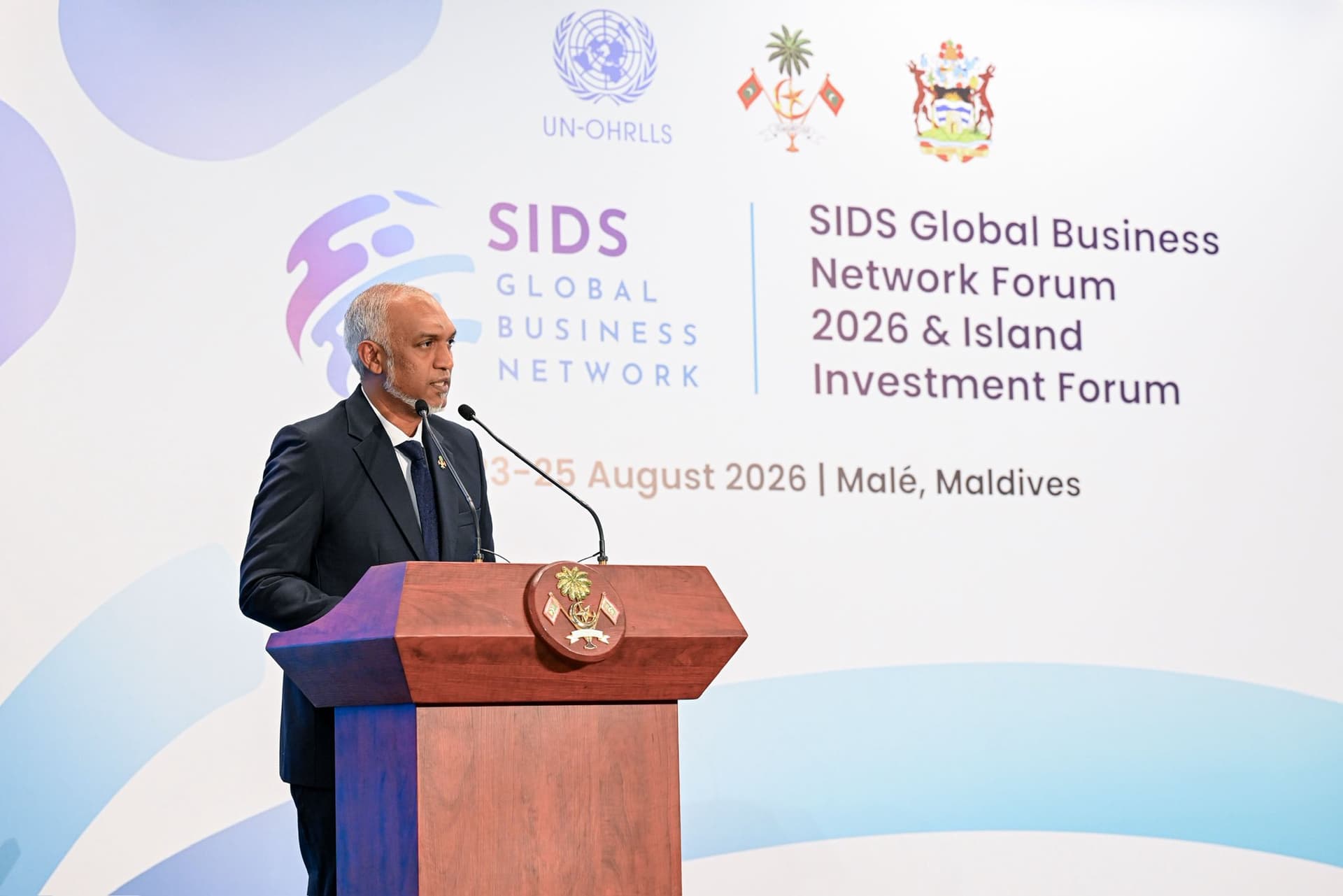
President Dr Mohamed Muizzu has called for Small Island Developing States SIDS to be viewed not only through the lens of climate vulnerability, but also as sources of innovation, entrepreneurship and economic
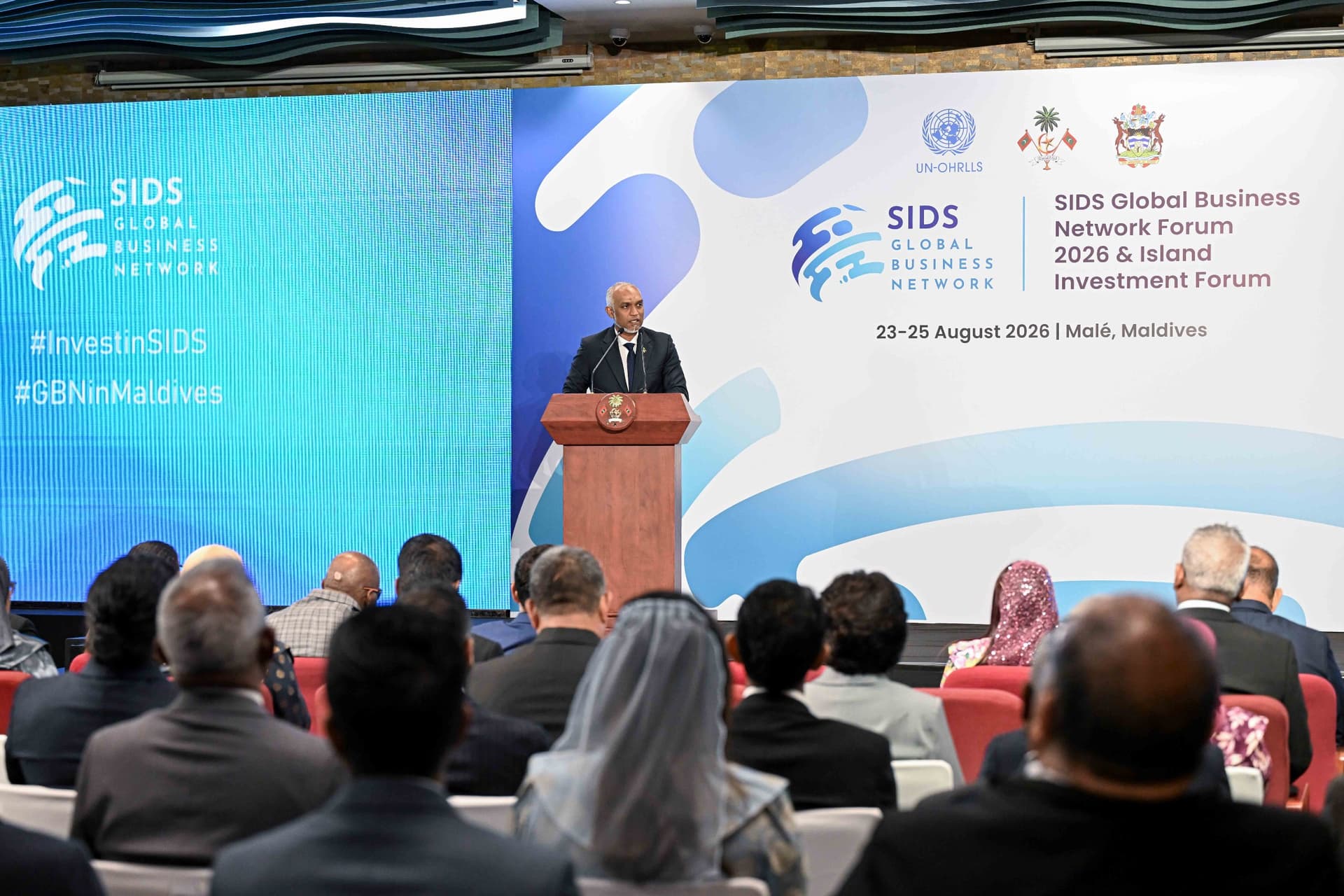
President Dr Mohamed Muizzu has called for Small Island Developing States (SIDS) to be viewed not only through the lens of climate vulnerability, but also as sources of innovation, entrepreneurship and economic opportunity.
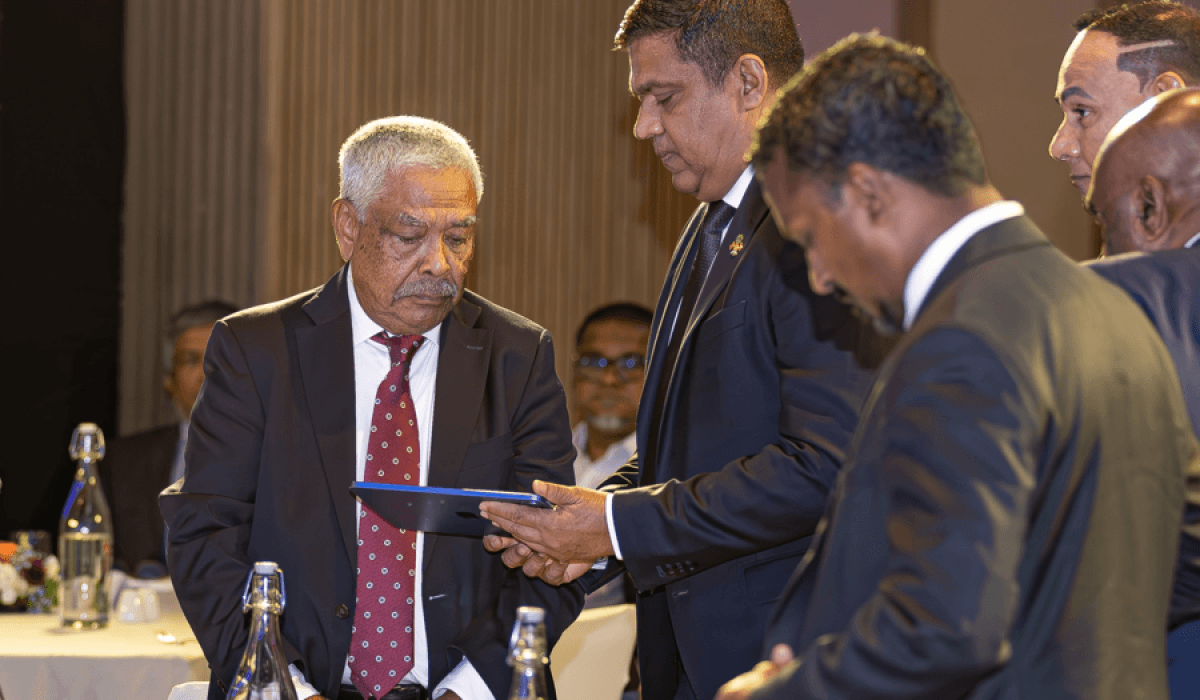
Speaking at the opening of the Small Island Developing States Global Business Network (SIDS GBN) Forum 2026 in the Maldives, President Muizzu said the resilience and determination of island nations should be placed at the centre of the global conversation on SIDS.
“For too long, the story of Small Island Developing States has been told primarily through the lens of vulnerability,” Muizzu said, noting that the other part of the story is the determination of SIDS to turn limitations into ingenuity and challenges into opportunities.
He highlighted micro, small and medium-sized enterprises (MSMEs) as key drivers of SIDS economies, saying many practical solutions originate from small businesses that respond directly to challenges in their communities.
Muizzu stressed that although SIDS have small populations and markets, the ideas generated in these countries do not have to remain limited by their geographical scale.
“An idea born on one island can reach customers, investors, and markets far beyond its shores,” he said.
The President outlined several initiatives undertaken by the Maldivian government to strengthen the environment for entrepreneurship, including dedicated financing, business development programmes and digital infrastructure.
He said the Maldives has designated 2026 as the Year of Productivity, while 2026 and 2027 have been designated as years of special focus on SMEs.
Among the financing initiatives highlighted was a USD 6.5 million loan scheme for start-ups, including earmarked financing for women-led businesses. According to Muizzu, the fund has so far supported nearly 200 women-led businesses.
He also highlighted the USD 65 million Youth Entrepreneur Financing Fund, aimed at improving access to capital for young entrepreneurs seeking to establish and expand businesses.
Beyond financing, Muizzu said the government is working to improve digital services, facilitate investment, reduce barriers to entrepreneurship and help Maldivian businesses become more competitive.
He said the Maldives aims to increase the contribution of the digital and creative economies to 15 per cent of GDP by 2030.
As part of this effort, the government is establishing regional cultural centres for heritage entrepreneurs and creator hubs for creative professionals, while the Maldives Expo is being used to provide businesses and creators with opportunities to showcase their products and capabilities.
The President also announced plans to establish the country’s first Trade Acceleration Zone by January 1, 2027, aimed at facilitating MSME growth and providing incentives for businesses.
Muizzu emphasised the importance of digital financial services in allowing small businesses to participate in the global economy. He pointed to the expansion of digital payment solutions, including BML Swipe, home-grown digital wallets and the integration of PayPal.
He also highlighted efforts to connect Maldivian producers with international buyers through a strategic partnership involving Authentic Maldives and Alibaba, alongside expanded market access through trade agreements.
Muizzu said digitalisation is central to the government’s Maldives 2.0 agenda, allowing businesses to overcome the geographical limitations of an archipelagic nation.
“For SIDS, digital connectivity is no longer simply a communications issue; it is economic infrastructure,” he said, noting its importance for trade, financial services, tourism, creative industries, education and employment.
The President also identified physical connectivity, renewable energy, logistics and maritime infrastructure as key areas for economic transformation.
He highlighted the development of the Thilafushi International Port as a strategic investment intended to strengthen the Maldives’ logistics and maritime capabilities, while noting that renewable energy projects, including floating solar, are being advanced to improve energy security and reduce reliance on imported fuel.
Muizzu said SIDS could use their relatively small scale as an advantage by serving as “laboratories for innovation and incubators for ideas, technologies, and solutions.”
He called for greater investment in SIDS and urged international partners to look beyond traditional investment flows, including through SIDS-to-SIDS investment, technology transfer and partnerships.
“Investment in SIDS is a strategic investment in innovation, resilience, and sustainable growth,” Muizzu said.
The President also called on the UN Office of the High Representative for the Least Developed Countries, Landlocked Developing Countries and Small Island Developing States (OHRLLS) to develop the Global Business Network into a central platform connecting promising island enterprises with finance, technology, partners and global markets.
He said governments, investors, technology companies, academia and civil society all have roles to play in building an ecosystem where businesses in SIDS can grow.
Muizzu concluded by reaffirming the Maldives’ commitment to strengthening cooperation among SIDS private sectors and increasing investment in adaptation and resilience.
“Our islands will remain small, but with smart investment, they can become powerful sources of ideas, innovation, and entrepreneurship that the world needs,” he said.
How did this land?
Share this story
Discussion
Comments are turned off for now.